Portfolio · 2026 · IntimPath
Nobody books an appointment about this.
Sexual problems are ordinary and almost nobody gets help with them. It is embarrassing to say out loud, a clinic costs money and a waiting list, pills treat the symptom, and the internet contradicts itself. So people do nothing, for years. IntimPath takes what a good clinician would actually prescribe — pelvic-floor training, anxiety work, education about your own body — and turns it into a few private minutes a day on your phone.
4–15minutes a day, alone, on a phone
9programmes, one per situation
376days of guided content
5languages, because this is hard enough in your own
The insight
These are trainable problems, not fixed traits
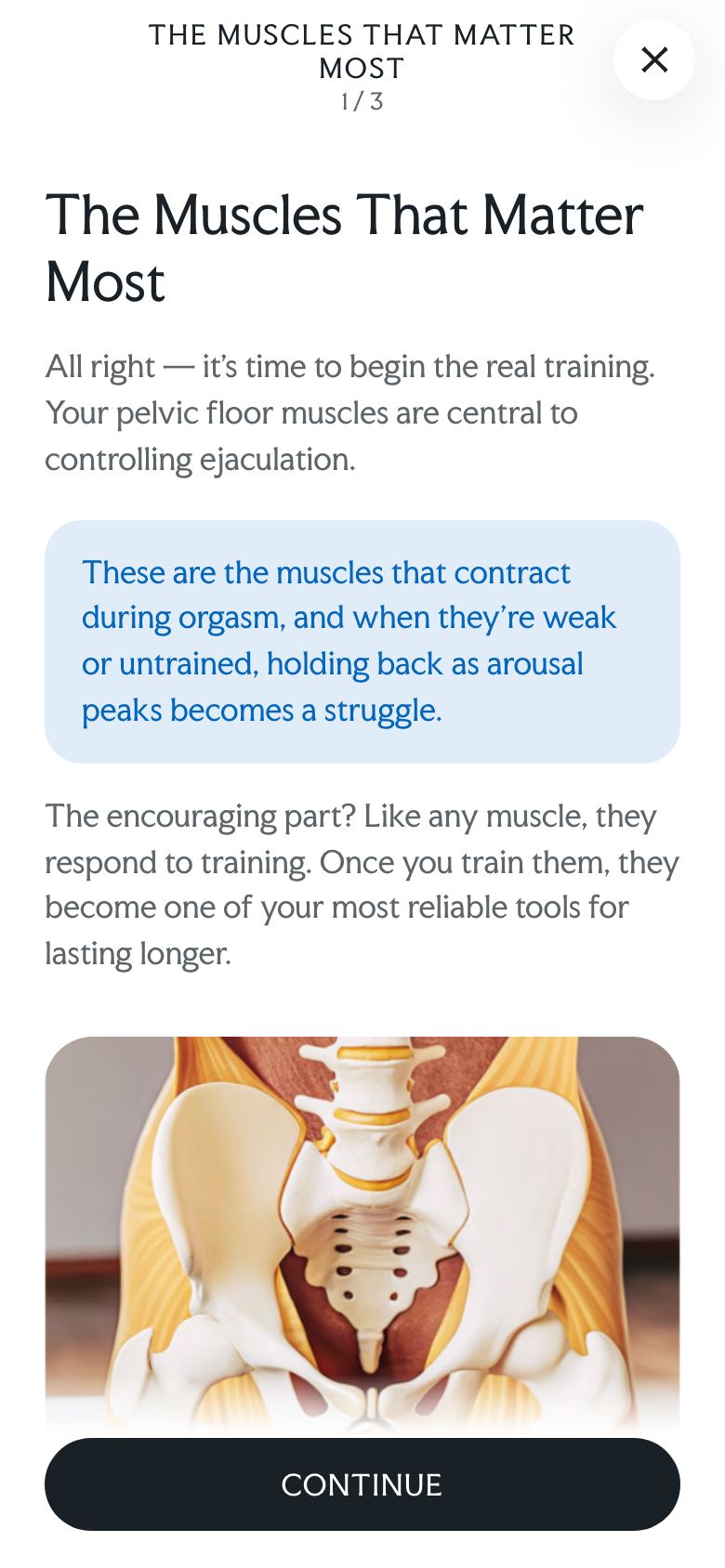
Control, arousal and desire respond to practice the way strength does. The pelvic floor is a muscle that gets stronger with progressive load. Performance anxiety is a loop that breaks with attention training. Desire responds to stress, context and knowing your own body. All three need the same thing: short repeated practice, correctly paced, over weeks.
That is exactly what people cannot self-administer. They do not know the right tempo, when to progress, or what to do on a bad week. So the product's whole job is to hold the plan and set the pace, and to keep the effort small enough that someone actually comes back tomorrow.
The product
How each pain is answered
"I don't know if I'm doing it right"
The workout player
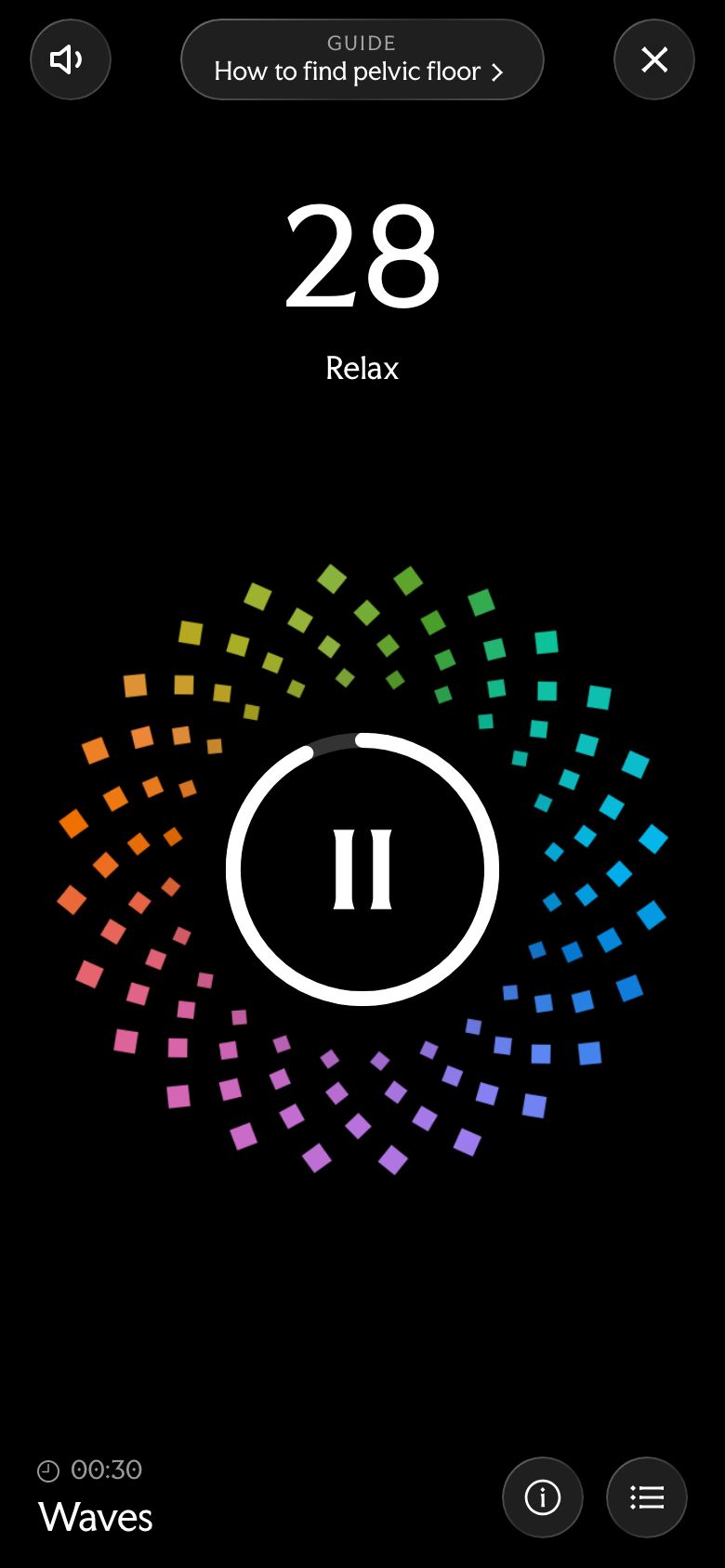
Pelvic-floor training fails because it is invisible: you cannot see the muscle, so you cannot tell tempo from guesswork. The player takes the counting away. A ring expands and contracts at the exact pace of the exercise, a voice says contract and release, and the phone can buzz the rhythm so you can close your eyes. You follow a shape instead of reading instructions.
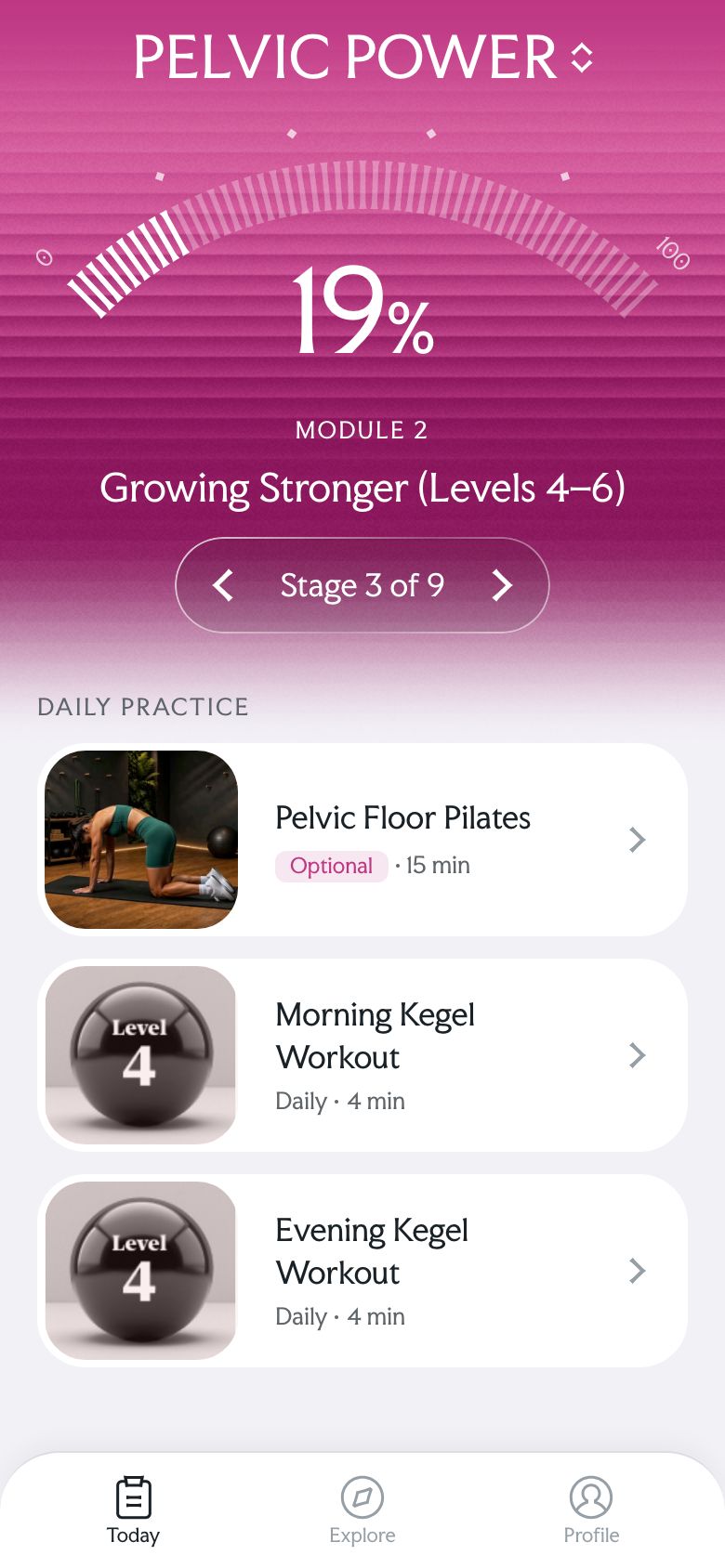
And it gets harder on its own. Ten levels, mapped day by day across the programme, so the load climbs as you get stronger without anyone deciding to make it harder. Day one is sensing the muscle at all; by the final weeks it is advanced holds and waves.
"I start things like this and stop by week two"
The daily plan
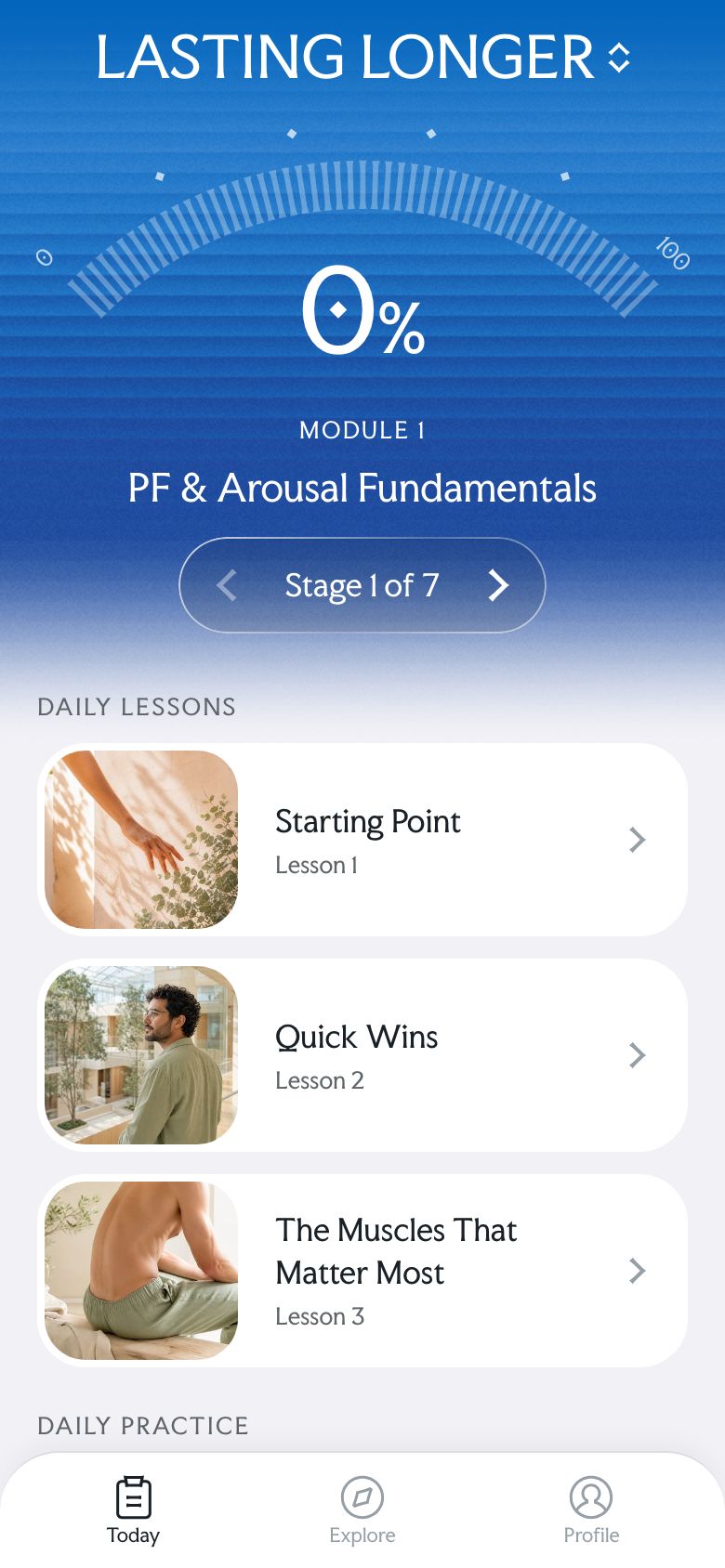
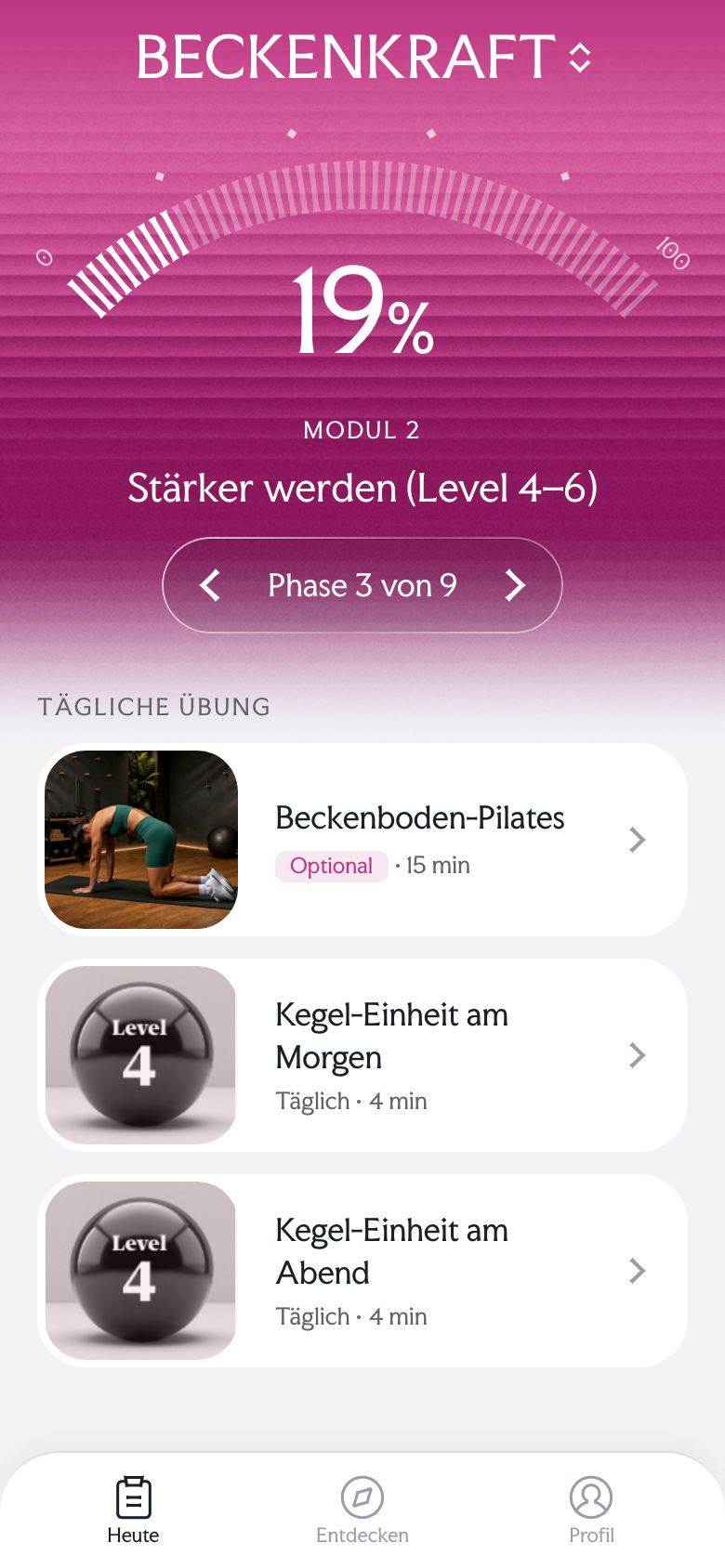
The home screen shows today and nothing else: two short lessons and one or two sessions, four to fifteen minutes in total. No library to browse, no decision to make, no backlog of unread material to feel guilty about. Progress is a single dial and a stage name, so a missed day is a pause rather than a failure.
"It isn't only physical"
Mind and anxiety practices
Performance anxiety, a loud inner critic and stress are the actual drivers for many people, so they are treated as content, not as a footnote: breathing and body-scan practices, sensate focus, an inner-critic exercise and its counterpart that trains the voice that talks you down. One women's programme spends a whole day separating physical, emotional, situational and anticipatory stress, because the right fix depends on which one you have.
"Generic advice doesn't fit my body or my situation"
Nine programmes, and an assessment at both ends
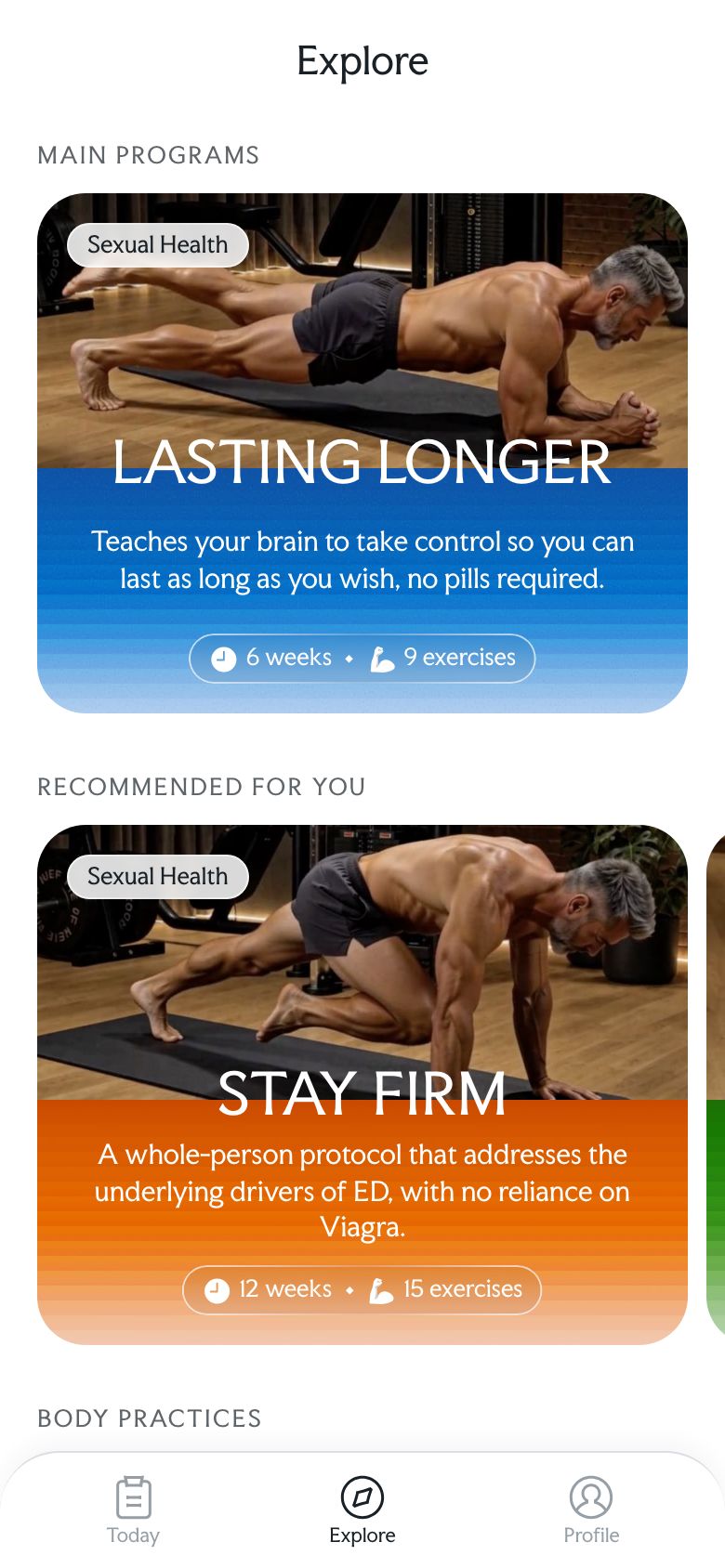
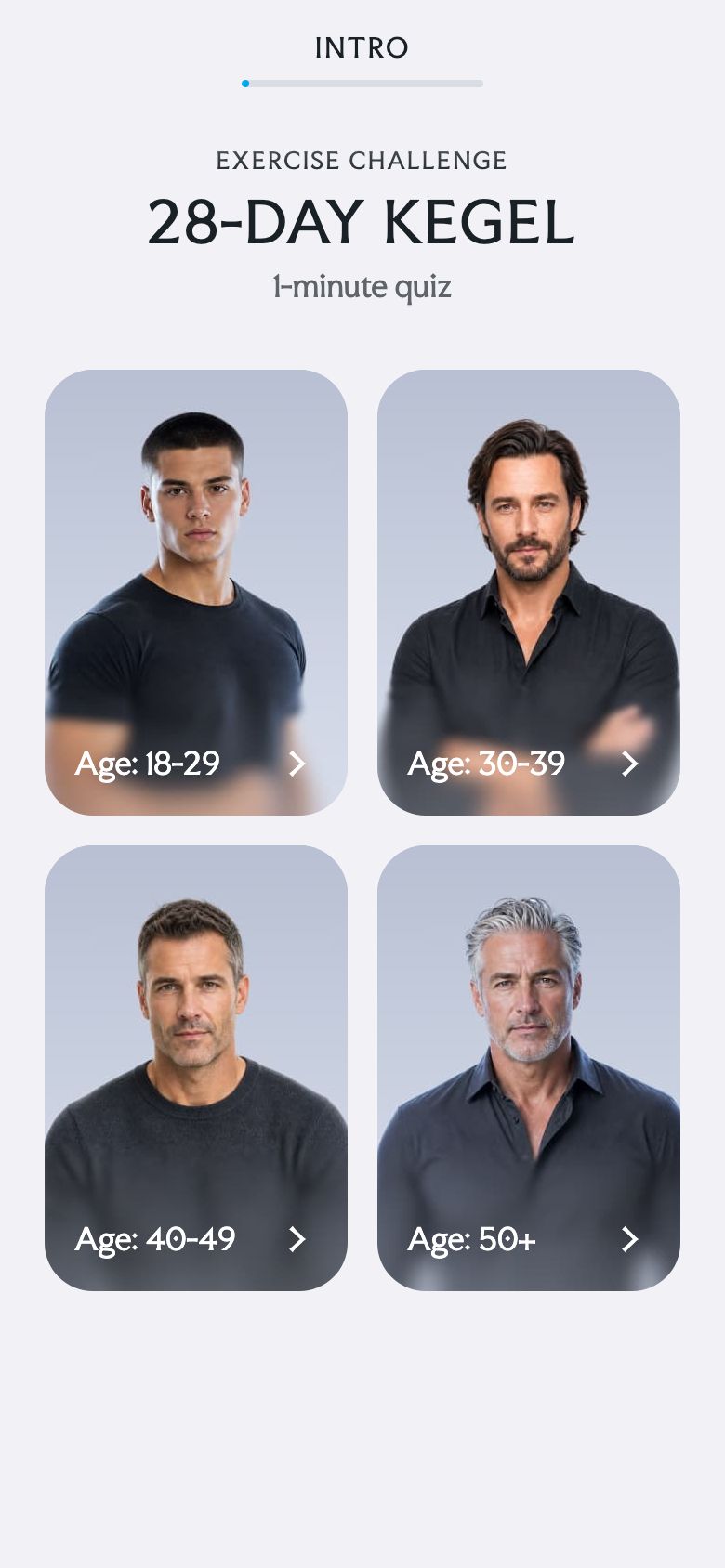
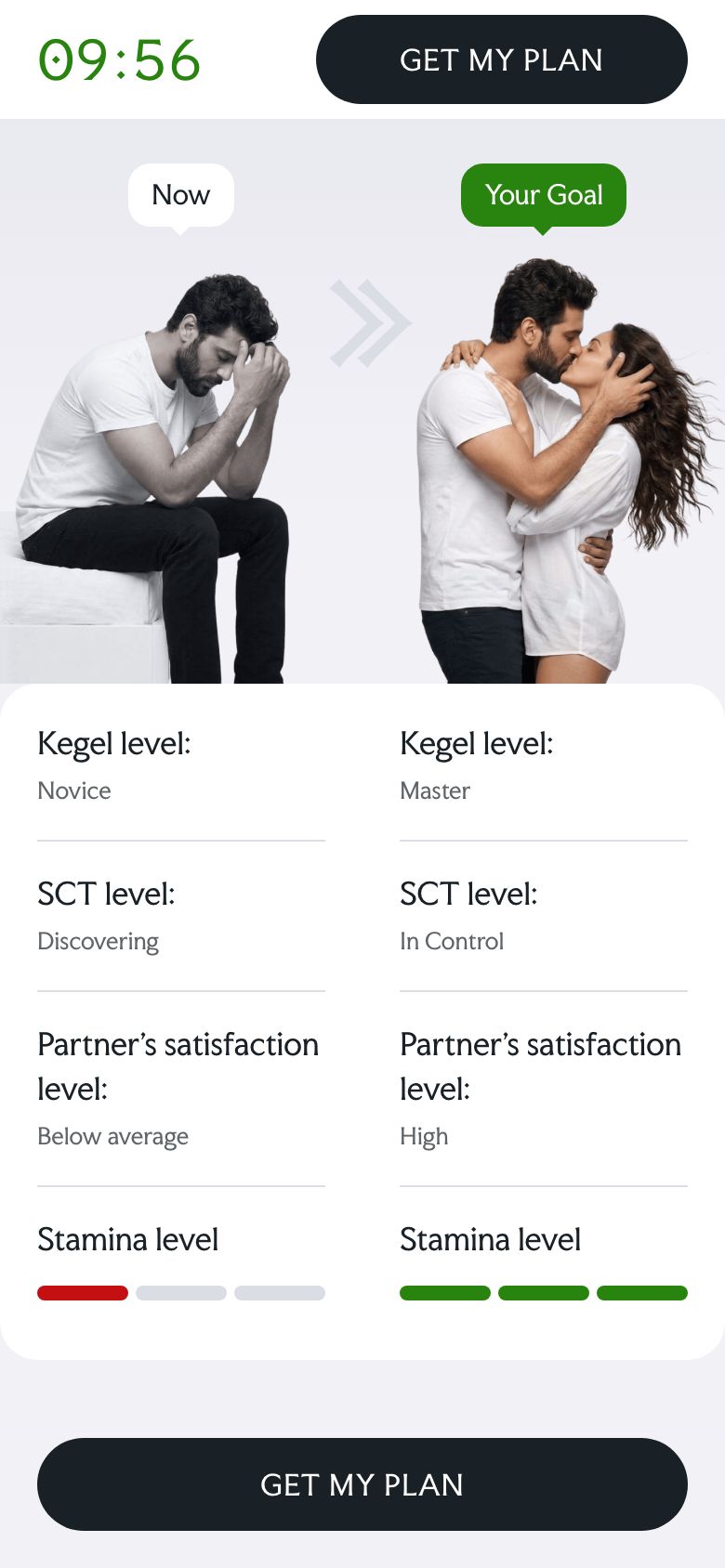
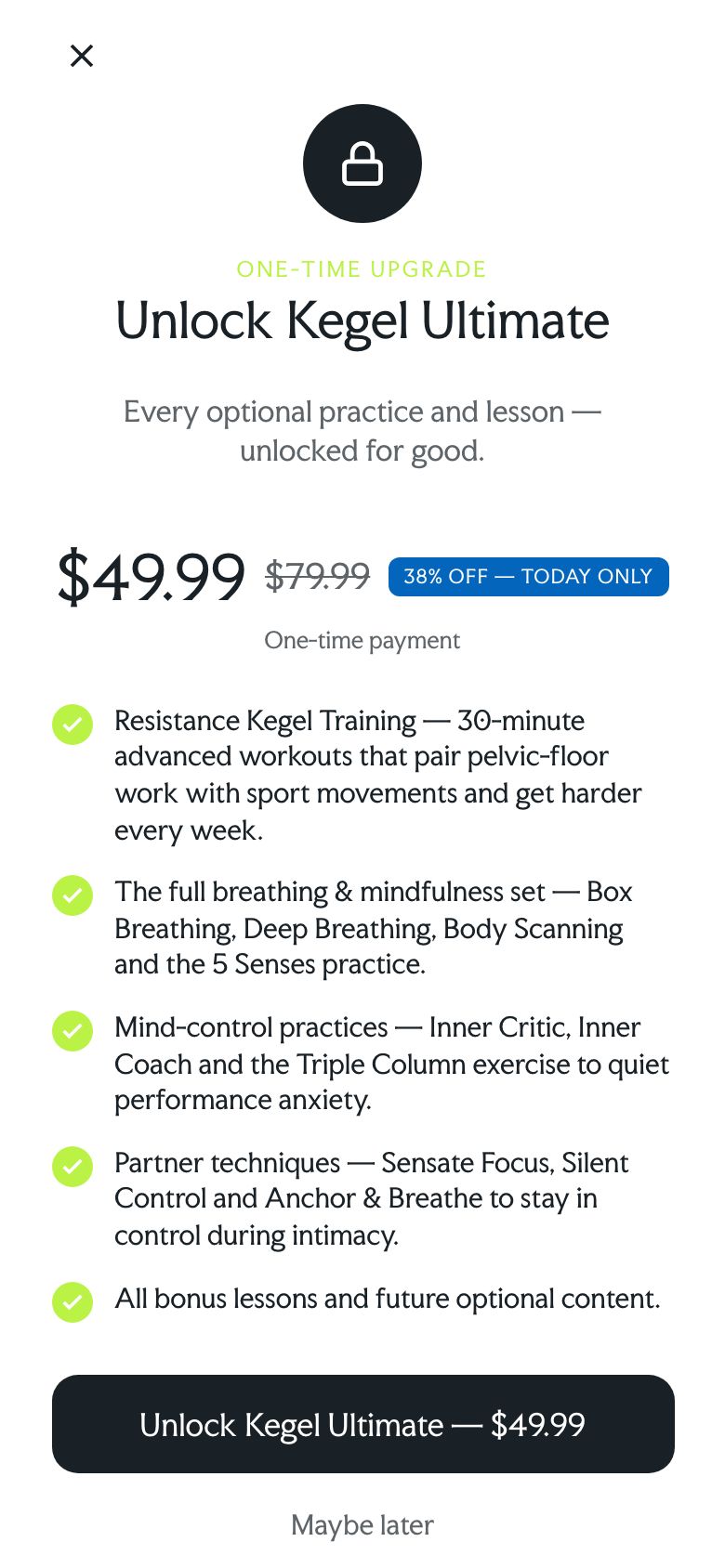
One plan for everybody would be wrong for almost everybody. There are separate programmes for lasting longer, for erection quality, for pelvic strength, for rebuilding desire, for learning your own body, for menopause, and a version written for queer women rather than a straight programme with the pronouns swapped. Each starts with a short self-assessment and ends by asking the same questions again, so the person can see what changed rather than being told.
"I would never talk to anyone about this"
Private by construction
It runs in a browser. There is no app-store icon on the home screen to explain, no appointment, no receptionist, no waiting room. Sensitive-data consent is asked for explicitly and recorded, and the content speaks plainly without being clinical or coy. For a category where shame is the main reason people never start, that is a product decision, not a technical one.
"Not in my language"
Five languages
Intimacy is hard to talk about in your first language and impossible in your fourth. Everything a customer reads or hears exists in English, German, French, Italian and Spanish, with the grammar written correctly for the person reading it rather than machine-swapped.
Skills
What I bring
- Product
- User research into decisions, scope and sequencing, pricing and packaging, funnels and conversion, retention mechanics, content strategy, launch readiness
- Sensitive categories
- Writing about sex, health and the body without shame or clinical distance; consent, privacy and claim discipline
- Shipping with AI
- Agent-driven implementation, review and QA gates, knowing where the output stops being trustworthy
- Technical fluency
- Node.js, React, SQL and migrations, git and merge-request flow, reading a diff and a stack trace
- Collaboration
- Working to a strict reviewer, briefing design, CRM and support, written handovers